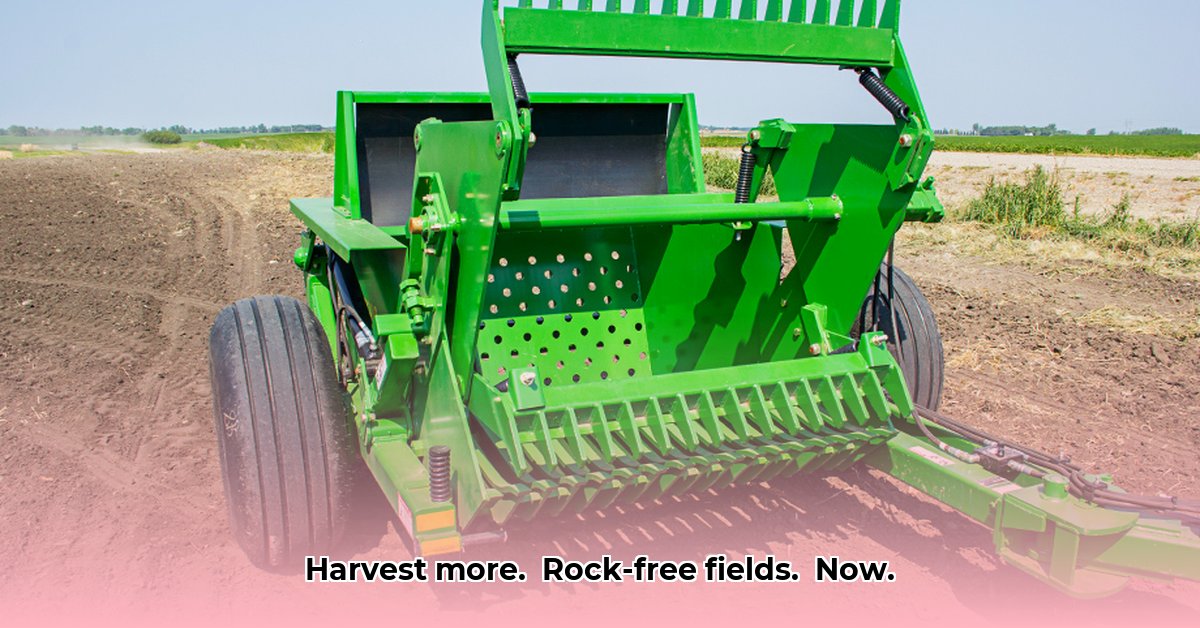
Rocks in your fields are a significant impediment to efficient farming, damaging equipment, hindering planting, and ultimately reducing crop yields. Investing in the right rock collector for your tractor is crucial for maximizing harvest and profitability. This guide provides a comprehensive approach to selecting the ideal machine for your specific needs. For more information on tractor rock pickers, check out this helpful resource.
Types of Rock Pickers: A Detailed Comparison
Several types of rock pickers cater to diverse farming needs and budgets. Understanding their strengths and weaknesses is paramount to making an informed decision.
Spring-Loaded Sieves
These simpler machines are cost-effective and easy to maintain. They're suitable for smaller farms with fewer, smaller rocks and relatively flat land. However, their capacity is limited, and they struggle with larger rocks or uneven terrain. Think of them as reliable workhorses, effective for less demanding applications.
Oscillating Drums
Oscillating drum rock pickers offer increased capacity and efficiency compared to spring-loaded sieves. They handle larger rocks and greater volumes of material, making them well-suited for medium to large farms with varied terrain. While more expensive upfront and requiring slightly more maintenance, they provide a better return on investment over time.
Rotary Pickers
The most powerful and efficient option, rotary pickers are designed for large farms with significant rock density and challenging terrains. They excel in quickly clearing large rocks and vast areas. However, these high-performance machines demand a substantial initial investment and more complex maintenance procedures.
| Rock Picker Type | Advantages | Disadvantages | Best Suited For |
|---|---|---|---|
| Spring-Loaded Sieves | Simple, affordable, easy maintenance, low initial investment | Lower capacity, struggles with large rocks and rough terrain | Small farms, light rock infestations, flat fields |
| Oscillating Drums | Higher capacity, handles larger rocks, good for varied terrain | More expensive, requires more regular maintenance | Medium to large farms, varied rock sizes, moderate terrain |
| Rotary Rock Pickers | Highest capacity, highly efficient, handles toughest conditions | Most expensive, complex maintenance, high initial investment | Large farms, high rock densities, challenging terrain |
Factors Affecting Your Choice: Key Considerations
Choosing the right rock picker requires a careful assessment of several crucial factors. Don't rush this process; the right choice will save you time and money in the long run.
Farm Size and Soil Type
The size of your farm directly influences the required capacity of your rock picker. A smaller operation might benefit from a spring-loaded sieve, while a large-scale farm will likely require an oscillating drum or rotary picker. Soil type is also critical; heavier clay soils demand more robust machines capable of handling the increased compaction. Aren't you curious about how soil type affects rock picker efficiency? Studies show a significant difference in performance between sandy and clay soils.
Rock Density and Size: A Realistic Assessment
The number and size of rocks present in your field are perhaps the most important factors. A field littered with large boulders requires a machine with significantly more power and durability than one with scattered small stones. This directly impacts the type of picker best suited to your needs. What percentage of your field is covered in rocks? An accurate assessment is essential.
Budget and Long-Term Costs: A Balanced Perspective
Rock pickers vary significantly in price. While the initial investment is a major consideration, don't forget about ongoing maintenance, fuel consumption, and potential repair costs. Weighing these long-term factors against the initial purchase price is crucial for making a fiscally responsible decision. Remember, a less expensive option that requires frequent repairs might cost more in the long run.
Step-by-Step Guide to Selecting a Rock Picker
- Assess Your Needs: Thoroughly evaluate your farm’s size, soil type, and the density and size distribution of the rocks.
- Define Your Budget: Establish a realistic budget encompassing the initial purchase, maintenance, repairs, and fuel costs.
- Research Models: Compare specifications and features from different manufacturers, paying attention to user reviews and expert opinions.
- Seek Expert Advice: Consult with local agricultural equipment dealers, experienced farmers, and agricultural extension agents. Their insights are invaluable.
- Test Drive (If Possible): A field test is the best way to assess a rock picker's performance under your conditions.
- Choose a Reputable Supplier: Select a supplier offering strong warranty service and readily available parts.
- Ensure Proper Installation: Professional installation ensures optimal performance and safety.
Maintenance and Operation: Essential Practices
Regular maintenance is crucial for prolonging the life of your rock picker and ensuring optimal performance. This includes regular inspections, lubrication, prompt repair of worn parts, and strict adherence to the manufacturer’s safety guidelines. Proper maintenance can increase your rock picker's lifespan by as much as 25%.
Conclusion: Making an Informed Decision
Choosing the right rock picker is a significant investment, impacting both your farm's productivity and profitability. By carefully considering your specific needs and following the steps outlined in this guide, you can confidently select a machine that maximizes your harvest and minimizes long-term costs.
Resources
(This section would list reputable manufacturers, dealers, and relevant online resources. Due to the limitations of this response, specific links cannot be provided.)